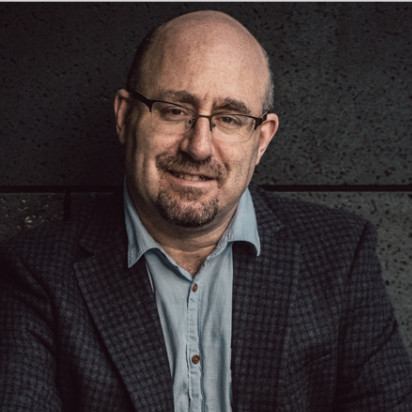
Three years after selling his agency, David Rodnitzky's earnout came due. More than half the purchase price was riding on it. The buyer, a publicly traded company, decided it didn't want to pay.
So David did the thing most founders never contemplate. He and his management team borrowed $10 million, he signed a personal guarantee, and they bought the company back.
"If the loan went south, they were coming for my assets. So that was pretty scary."
He thought that was the end of the road. It wasn't. A year later, buyers were circling again, and David ran a second process and sold to private equity. Three years after that, 3Q Digital merged into DEPT, the Carlyle-backed European agency group, and David walked away from the operating role for good.
David founded 3Q Digital in 2008 after seven years client-side in Silicon Valley and scaled it mostly organically. He sold it to Harte Hanks in early 2015, bought it back in 2018, sold it to PSP Partners and Erie Street in 2019, and saw it join DEPT in 2022. Strategic, private equity, agency group. One company, three buyer types, and one unplanned trip home in between. He also wrote the book on it, Selling Your Marketing Agency, which Peter recommends to every founder who will listen.
This is what David learned along the way, and what he'd add to the book now.
Sell Too Early, Not Too Late
David opens with the lesson he considers most important, and it's about timing.
"I do believe it's better to sell too early than too late."
The reason is structural. Most founders sell once, and that one sale is the biggest financial event of their lives. Every other party at the table has done it dozens of times.
"All the other people involved in the transaction typically have done this ten, twenty, thirty, a hundred times. That includes your banker and your lawyer and frankly the person who's buying your company. So you're at a significant disadvantage for the most important transaction of your life."
His answer is to hire people who've been through it, because the asymmetry is real and everyone across the table knows it.
You will do this once; they've done it a hundred times, so borrow their reps.
One Bidder Changes Everything. Two Changes It More.
The Harte Hanks story is the clearest illustration of why running a process matters. The public company had told the market it would acquire an SEM agency in Q4 2014, missed the quarter, and came in second on a competitor. It needed a deal.
Three bidders came in. The first offered what David expected. The second offered 20% more. Harte Hanks, under pressure from its own investors, bid well above both.
"It only takes one buyer to really want your business to get a huge valuation."
The second lesson came from the other direction. Before the private equity sale, a PE firm David liked asked him to skip the process. Just name a number, they said, and we'll close in thirty days.
"I went back and I put my pencils to the paper and I said, 'Well, I think if you offered us X, I will just forget the process.' And they came back and they said, 'Great, we're gonna offer you 75% of X.'"
He ran the process anyway. The same firm bid exactly X once there was competition. Another bidder came in at 1.5X.
"You can have a great relationship with an acquirer, but the situation matters. In this case, this acquirer thought, 'I'm going solo, I'm going one on one, so I don't need to really make an outstanding bid.'"
A buyer who knows they're alone will price you like they're alone.
What Each Buyer Actually Did Differently
The three deals had three different structures, and David is specific about what each one taught him.
The Harte Hanks deal was more than half earnout, paid as a lump sum after three years. Because so much of the price was deferred, David negotiated total operating control: who to hire, who to fire, what to charge, which clients to take.
"Until you pay me that full amount, I'm basically an independent company. And that turned out to be a really good decision because one, we had control of our destiny, but two, when we got to the end of the three-year earnout, they said, 'Well, we don't really want to pay the earnout.' We had an intact company that we were able to completely pivot any way we wanted."
The private equity deal was a classic rollover: cash up front, equity retained. What PSP and Erie Street brought wasn't just capital. They brought a CFO, which 3Q had never had, and a focus on profit over growth.
"By the time we got to the second transaction, I think we were at sixty-five million in revenue and we did not have a CFO."
There was, by his account, a lot of fat to cut. Fifteen people in marketing where five would do. Clients running under 10% EBITDA. And a category of deal the team had a name for.
"There used to be something called the David Deal at 3Q."
A hot Silicon Valley startup would arrive, fresh off a Series A, spending $20,000 a month and able to pay $4,000 for management that cost 3Q seven or eight. David would take them on anyway, partly out of enthusiasm and partly to keep competitors out of the Valley. One in five became a million-dollar spender. The other four never got out of the gate.
"I learned my lesson that it's not worth it to take a flyer on a company if you don't have to."
EBITDA and margin rose sharply, and within three years 3Q was attractive to much larger acquirers. The DEPT deal, in David's words, was peanut butter meeting chocolate: DEPT had creative, technical depth, and Europe; 3Q had US performance marketing and none of those.
A good private equity partner doesn't just cut costs; they fix the things you were too close to see.
Fire Yourself From Every Job
David got 3Q to roughly 300 people before the PE deal and 500 by the time DEPT arrived. Most agency founders never see those numbers, and Peter asked what bridges the gap.
David's answer is about the founder's role, not the headcount.
"The job of an entrepreneur is to fire himself from jobs. When I started the business, I was the chief sales officer, the chief HR officer, the chief Costco orderer. I was everything. And I quickly learned that there's things that I'm just not as good at as other people."
By the third sale, he had removed himself almost entirely. DEPT reportedly hired an investigator to confirm he was as uninvolved as he claimed.
"When the CEO of DEPT called me and said, 'Hey, just tell me, what do you do all day?' And I'm like, honestly, not much."
That wasn't an accident. It's a decision he says a founder has to make about a year before a transaction: stay and operate, or leave. If leaving, start firing yourself now.
He credits the people who made that possible, including his sister Laura Rodnitzky, who joined as an account manager, discovered she hated it, and built the HR function from forty people to five hundred.
"Agencies are a human capital business. So you win by hiring the absolute best talent and you also win by firing fast."
If you want to leave at close, you have to be replaceable a year before close.
What's Not in the Book: AI
Selling Your Marketing Agency was written during COVID and before generative AI. David calls both black swan events for the industry, and the second one changes his outlook on who survives.
"In this AI world, 40% of agencies are probably gonna die, 40% are probably gonna tread water, and the remaining 20% are gonna do really well. That's very different than what I would have told someone five years ago."
What he'd tell a seller now sits on top of the old fundamentals, not in place of them. EBITDA, growth rate, concentration, tenure, team all still matter. Then add a real story about where AI forced a pivot and how clients responded.
Two warnings come with that. First, don't build software.
"Agencies shouldn't build software and software companies shouldn't become agencies."
Second, don't mistake a prompt for a moat.
"Building prompts in a vibe coding tool does not make you a defensible agency. If you can do it in five to ten hours, everyone else can do it in five to ten hours as well."
His example of a strategy that does create stickiness is the agency as AI curator: evaluate fifty tools a quarter, cut half, demo the rest, negotiate with ten, and bring the client an exclusive shortlist of five, refreshed every quarter. The client doesn't have time to do that. That's the whole point of hiring an agency, and it has been since agencies existed.
Your AI story has to be something a competitor can't copy in a weekend.
Great Agencies Are Bought, Not Sold
For the owner who doesn't have the numbers but has told their spouse they're out in two years, David is blunt about the bar.
"If you have EBITDA in excess of three to five million dollars annually, and your EBITDA percentage is in excess of fifteen percent and preferably twenty percent, and you don't have client concentration, and your compound annual growth rate is thirty percent a year, I think people are going, 'There's a buyer.'"
Below that, a COVID-era buyer might have shown up anyway. Not now. And as he put it, you can't hang a for-sale shingle and wait.
"Great agencies are bought and not sold."
His prescription is the one Chris Lien used to pitch Sequoia before Marin Software had any funding: tell them what you'll achieve, hit it, and come back. Go meet five or ten buyers who'd be a fit. Don't ask them to buy. Show them the trajectory and ask whether, if you land there in eighteen months, you'd be a partnership worth discussing. Then go hit the numbers.
As Peter put it, every buyer loves proprietary inbound.
Pick the buyers first, then build the business they'd want.
Listen to the Full Conversation
David Rodnitzky is a founder who got to the end of the road three times and found a different road each time. Hear the full episode for the Google churn-rate exchange, the shirt he always wanted to make about Publicis, and why he's been playing with house money since 2018.