
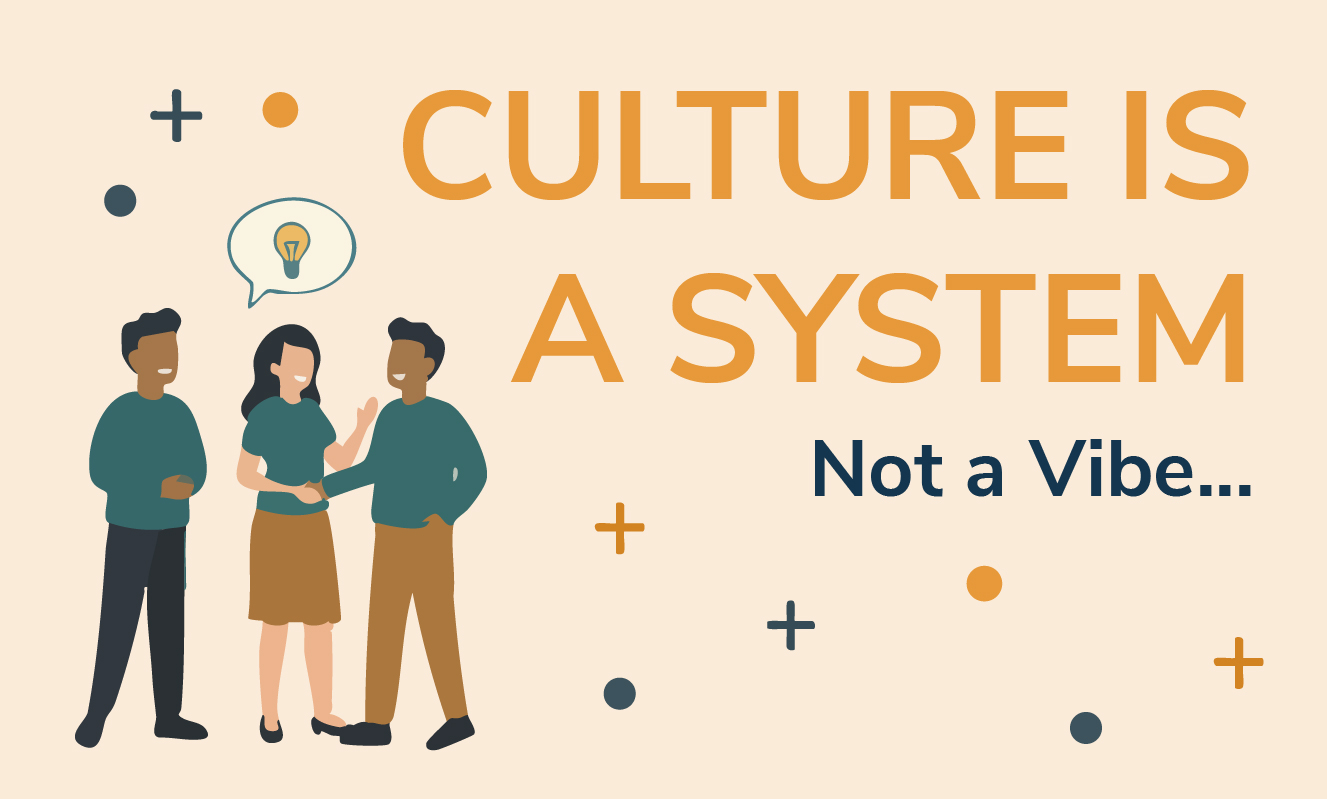
Most agency owners talk about culture like it’s a feeling.
“We’re collaborative.” “We’re innovative.” “We’re like a family.”.
True organizational culture runs much deeper. It's an intricate, living system, not a collection of isolated elements. It's built upon a deliberate and well-understood framework of structures, which could include organizational charts, decision-making hierarchies, and communication channels.
Beyond these visible structures, culture manifests in the behaviors that are encouraged, tolerated, or discouraged - how people interact, collaborate, and resolve conflicts.
Rituals, whether formal or informal (e.g., weekly stand-ups, celebration of milestones, or even how new ideas are presented), reinforce shared values.
Finally, the norms, often unwritten rules, dictate acceptable conduct, work ethic, and even how success is defined. These interconnected components collectively shape the fundamental processes of how your team approaches challenges, makes critical decisions, and ultimately delivers on its objectives. This comprehensive system is what truly defines an agency's identity and operational efficiency.
The critical insight here is that culture is not a passive outcome; it's an active creation.
If leaders fail to intentionally design and nurture their agency's culture, a culture will still emerge - but it will do so organically, driven by individual personalities, default reactions, and unexamined assumptions. This "default" culture, while perhaps comfortable in the short term for a small team, invariably becomes a significant impediment to growth.
Without intentional design, inconsistencies arise, miscommunications multiply, and decision-making slows down. As the agency scales, these unaddressed cultural friction points can lead to inefficiencies, internal conflicts, and a fragmented sense of purpose, making it incredibly difficult to maintain cohesion and achieve ambitious goals. A haphazard culture fundamentally undermines the very foundations needed for sustainable expansion.
This article will serve as a practical guide, shifting the perception of culture from an intangible "vibe" or a collection of perks to a strategically engineered system. We will explore actionable strategies for identifying the core elements of your agency’s desired culture and then deliberately designing structures, fostering specific behaviors, establishing meaningful rituals, and defining clear norms.
The ultimate goal is to create a cultural framework that achieves three crucial outcomes: firstly, it ensures that every member of your team is aligned with the agency's mission and values, fostering a shared sense of purpose.
Secondly, it streamlines operations and empowers faster, more effective execution, translating directly into enhanced productivity and client satisfaction.
Finally, by cultivating such a robust and intentional culture, your agency will inherently become more resilient, adaptable, and, consequently, significantly more valuable in the competitive market.
Step 1: Define the Non-Negotiables
Culture is the invisible yet palpable force that propels every truly high-performing organization forward, whether it's an elite sports team vying for a championship or a multi-billion-dollar enterprise dominating its market.
These organizations operate not on a whim, but from a carefully curated, concise list of non-negotiables: the deeply ingrained behaviors and unwavering values that serve as an internal compass, guiding every decision, especially when no one is observing.
To cultivate such a powerful and effective organizational culture, here's a comprehensive approach to building your own bedrock principles:
Focus on Core Behaviors, Not Empty Buzzwords
The trap many organizations fall into is listing generic, aspirational words like "integrity," "innovation," or "excellence." While these words sound good, they lack actionable definition.
Instead, pivot to observable, concrete behaviors.
What does "integrity" actually look like in your day-to-day operations?
For example, instead of "We value integrity," articulate it as: "We own outcomes, not just tasks – seeing projects through to successful completion and taking responsibility for results."
Or, rather than simply "excellence," define it as: "We speak up when something's broken, proactively identifying inefficiencies and proposing solutions, even if it challenges the status quo."
These behavioral statements provide a clear roadmap for employees on how to act in line with the company's ethos.
Tie Values Directly to Measurable Business Outcomes
- Core Behaviors: A robust culture isn't a fluffy add-on; it's a strategic asset that directly impacts the bottom line. Every single core behavior you define must demonstrably ladder back to something tangible and measurable within your business.
- Think critically: how does "owning outcomes" contribute to client success, increase profit margins, enhance operational speed, or improve employee retention? If a core behavior can't be linked to a measurable business outcome, it's likely too abstract or irrelevant to truly drive performance.
- This connection ensures that your cultural principles are not just ideals, but practical tools for achieving strategic objectives.
Test for Alignment from the Very Beginning
- Core Behaviors As A Filter: Culture isn't something that magically materializes after an employee has joined your team. It's woven into the fabric of your organization long before that. Therefore, it's crucial to use your defined core behaviors as a filter and a guide throughout the entire employee lifecycle.
- From the Very Beginning: Integrate these behaviors into your hiring process, designing interview questions that probe for examples of how candidates embody these values. Incorporate them explicitly into your onboarding programs, ensuring new hires understand the cultural expectations from day one. And, critically, utilize them in performance reviews and feedback sessions, providing a clear framework for evaluating and developing employees.
- Self-Sustaining Culture: By consistently reinforcing these behaviors from the outset, you build a self-sustaining culture of individuals who genuinely align with your organization's mission and values.
Pro Tip for Cultural Authenticity: The litmus test for truly effective values and behaviors is their utility in real-world scenarios. If your articulated values don't provide a clear framework for making a difficult hiring decision, helping you discern between two equally qualified candidates, for instance, or if they don't offer a practical pathway to resolving a contentious team conflict, then they are likely too vague, generic, or aspirational to be truly impactful. Your culture should be a working tool, not just a decorative statement.
Step 2: Systematize Rituals and Cadence
Culture isn't merely what you state as your values; it's profoundly shaped by what your team consistently does. Rituals, therefore, are the powerful tools that create predictable, recurring moments where your agency's core values visibly come to life and desired behaviors are reinforced, becoming embedded in the everyday fabric of your organization.
Consider these impactful examples of rituals that genuinely drive positive change and measurable outcomes within an agency setting:
Weekly Wins & Lessons
- Dedicate 15 minutes every Friday to a team huddle. This ritual is crucial for building psychological safety, encouraging open communication, and fostering a culture of continuous learning and improvement. It transforms individual experiences into collective knowledge.
- During this session, each team member shares:
- One significant success from the past week
- One key learning or mistake.
Client Retrospectives
- After every major project or campaign, conduct a debriefing session specifically focused on client interactions and project delivery. This ritual instills a habit of critical reflection and proactive adaptation, ensuring ongoing client satisfaction and operational excellence.
- These retrospectives should objectively assess:
- What worked well
- What didn't meet expectations
- Most importantly, what specific changes will be implemented for future projects
Monthly All-Hands Meeting
- Establish a regular, transparent update from leadership to the entire team. This ritual is vital for maintaining alignment across the organization, boosting team morale, and ensuring everyone feels connected to the agency's overarching goals and progress.
- These monthly gatherings should cover:
- Critical business metrics
- Current priorities
- And provide a platform for publicly recognizing outstanding individual and team contributions.
Why these rituals are indispensable: Without a deliberate system of ingrained rituals, agency culture is susceptible to erosion and can quickly devolve into disorganization as teams grow and projects multiply.
Rituals serve as the operating system of your culture, providing the necessary framework and rhythm to keep your foundational values vibrant, understood, and actively practiced, especially during periods of rapid scaling and transformation.
They translate abstract values into concrete actions, ensuring that your agency's identity strengthens rather than fragments under pressure.
Step 3: Build Feedback Loops Into the System
A thriving agency culture is fueled by consistent and constructive feedback.
However, many agencies fall into the trap of relying on outdated and ineffective methods like annual reviews, which often come too late to be impactful.
To truly cultivate a culture of growth and continuous improvement, agencies must integrate real-time feedback mechanisms directly into their daily workflows. This proactive approach ensures that feedback is timely, relevant, and directly tied to performance and development.
Key strategies for building a robust, real-time feedback system:
- Structured One-on-One Conversations: Move beyond simple status updates, these sessions should be intentionally structured as coaching and development opportunities. Focus on:
- Goal Alignment and Progress: Discuss individual and team goals, celebrating successes and identifying areas where support is needed.
- Skill Development and Growth: Explore opportunities for learning, training, and expanding skill sets.
- Addressing Blockers and Challenges: Provide a safe space for team members to voice concerns, discuss obstacles, and collaboratively find solutions.
- Personal and Professional Well-being: Touch base on overall well-being to ensure a healthy work-life balance and address potential burnout.
- Quarterly 360 Feedback Cycles: Implement a regular cadence of peer reviews, ideally on a quarterly basis. This comprehensive approach ensures that feedback comes from multiple perspectives, fostering cross-team accountability and reinforcing collaborative behaviors. Key aspects include:
- Multi-directional Input: Gathering feedback not only from managers but also from peers, direct reports, and sometimes even clients.
- Focus on Strengths and Development Areas: Highlighting individual contributions and identifying specific areas for improvement.
- Promoting Collaboration: Encouraging team members to provide constructive feedback that supports collective success.
- Anonymity (with careful consideration): 360 feedback can include elements of anonymity to encourage candor, provided there's a mechanism for identifying actionable themes.
- Seamless Client Feedback Integration: Elevate client input beyond mere satisfaction surveys. Make client feedback an integral part of your internal feedback loop, directly connecting team behavior to tangible business results. This involves:
- Regular Client Check-ins: Proactively soliciting feedback at various stages of a project, not just at its conclusion.
- Specific and Actionable Insights: Translating client comments into clear, actionable points for the team.
- Celebrating Client Successes: Recognizing and rewarding team members for positive client feedback.
- Learning from Client Challenges: Using critical client feedback as an opportunity for internal reflection and process improvement.
Pro Tip for Driving Action: The most meticulously gathered feedback is useless if it doesn't lead to change. To ensure feedback is truly valuable and impactful:
- Track Themes and Patterns: Analyze feedback for recurring themes, both positive and areas needing attention. This provides a holistic view of team and agency performance.
- Communicate Actions Taken: Crucially, close the loop by transparently demonstrating to the team how their input has led to specific changes, improvements, or new initiatives. This builds trust, reinforces the value of their contributions, and encourages continued engagement in the feedback process.
By embracing these strategies, agencies can transform feedback from a perfunctory exercise into a powerful engine for continuous improvement, fostering a dynamic and healthy culture where every team member feels heard, valued, and empowered to grow.
Step 4: Align Incentives With Culture
For any cultural transformation to genuinely take root and endure, it's imperative that an organization's reward systems are meticulously aligned with its desired cultural behaviors. If compensation, promotions, and recognition aren't directly tied to the actions and attitudes that define the new culture, then any efforts to cultivate that culture will ultimately prove futile and won't stick.
The fundamental truth is that people inherently do what they're rewarded for. This innate human drive means that organizations must be incredibly intentional about what they choose to reward. By strategically incentivizing the right behaviors, businesses can powerfully reinforce their cultural aspirations and guide their employees towards embodying the desired values.
Here's how to strategically align your reward systems:
Compensation
- Beyond Just Revenue. While revenue generation is undoubtedly crucial, tying bonuses solely to financial metrics provides an incomplete and often detrimental picture. To truly foster a thriving culture, expand the criteria for compensation to include a broader spectrum of metrics that directly reflect desired cultural behaviors. Consider incorporating:
- Client Retention: Rewarding teams or individuals who excel at nurturing long-term client relationships underscores the importance of client-centricity and consistent value delivery.
- Collaboration Scores: Implement mechanisms to assess and reward effective teamwork, cross-departmental cooperation, and knowledge sharing. This could involve peer reviews, project feedback, or specific metrics related to joint initiatives.
- Leadership Behaviors: For those in leadership positions, tie a portion of their compensation to their ability to model desired cultural values, mentor their teams, and foster a positive and inclusive work environment. This reinforces that leadership is not just about directives but also about cultural stewardship.
Promotions
- Recognizing Values, Not Just Numbers. A common pitfall in many organizations is promoting individuals primarily based on their ability to hit numerical targets, even if their behaviors contradict the company's stated values. To build a strong culture, promotions must be reserved for those who not only deliver results but who also live the values of the organization. This means:
- Value-Based Assessment: Integrate cultural fit and embodiment of core values into the promotion criteria. Assess how candidates demonstrate integrity, teamwork, innovation, or customer focus in their daily work.
- Role Modeling: Promote individuals who consistently exemplify the desired culture, acting as role models for their peers and subordinates. This sends a powerful message that values are as important as performance.
Recognition
- Publicly Celebrating Behavior. Recognition is a potent tool for reinforcing desired behaviors and making the new culture tangible. When individuals or teams demonstrate cultural values, it's vital to celebrate those behaviors publicly and consistently.
- Specific Examples: When recognizing someone, don't just say "great job." Instead, articulate what specific behavior they demonstrated that aligns with the culture. For example, "Sarah truly embodied our value of collaboration when she proactively helped the marketing team with their presentation, even though it wasn't directly her responsibility."
- Visibility and Frequency: Ensure recognition is visible throughout the organization and happens regularly. This could involve company-wide announcements, team meetings, internal newsletters, or dedicated recognition programs. Reinforce examples that clearly demonstrate the culture you’re actively building, making them aspirational for others.
The Critical Watch-Out: Unintentional Rewards of the Wrong Behaviors
Many agencies and organizations, often unintentionally, fall into the trap of rewarding behaviors that are antithetical to a healthy and sustainable culture. A classic example is the tendency to reward "heroic saves" - instances where an individual or team pulls off a last-minute miracle to avert a crisis.
While seemingly commendable, consistently rewarding such "firefighting" often discourages the proactive development of robust systems and processes that would prevent these fires from erupting in the first place.
Instead of celebrating the "hero," organizations should strive to create an environment where the need for such heroics is minimized. This involves rewarding:
- Proactive Planning: Recognizing and incentivizing thorough planning, risk assessment, and preventative measures.
- System Building: Valuing individuals who contribute to developing and implementing efficient systems and scalable processes.
- Early Problem Identification: Encouraging and rewarding employees who identify potential issues early, allowing for timely intervention before they escalate into crises.
By being mindful of these pitfalls and deliberately aligning all reward systems with desired cultural behaviors, organizations can create a powerful engine for lasting cultural change and foster an environment where the right actions are not only encouraged but celebrated and rewarded.
Step 5: Codify It All Into a Culture Playbook
Culture, in its most nascent form, resides within the minds and hearts of individuals. It’s a shared understanding, an unspoken agreement that dictates how people interact, make decisions, and pursue objectives.
However, this human-centric nature, while beautiful and organic, inherently makes it fragile. When key individuals depart, or when the team undergoes significant changes, the very essence of that culture risks dissipating. The wisdom, the unwritten rules, and the collective spirit can easily be lost, creating instability and undermining the foundational principles of the organization.
The true power of culture, and indeed its capacity for enduring impact, lies in its ability to transcend individual minds and become embedded within a system. When culture is systematically documented and integrated into the operational fabric of an organization, it transforms from a vulnerable, ephemeral concept into a resilient, scalable force.
This systematic approach ensures that culture is not dependent on the presence of specific individuals but rather on the robust structures and processes that guide collective action.
The Culture Playbook: Your Organization's North Star
Once the core tenets of your organizational culture - values, rituals, feedback loops, and incentives - have been thoughtfully defined and articulated, the crucial next step is to codify them into a Culture Playbook. This playbook is more than just a document; it is the definitive source of truth for your organization, a living guide that ensures consistency, clarity, and alignment across all levels and functions. It serves as an invaluable resource, providing a clear framework for navigating a multitude of organizational scenarios:
- Hiring and Onboarding New Team Members: The Culture Playbook acts as an essential tool for attracting and integrating new talent. It allows you to articulate your organization's ethos to prospective employees, ensuring a strong cultural fit from the outset. During onboarding, it provides a comprehensive guide, rapidly immersing new hires into the company's values, expectations, and operational norms, fostering a sense of belonging and accelerating their productivity.
- Guiding Leadership Decisions: For leaders, the Culture Playbook is an indispensable compass. It provides a clear set of principles that inform strategic choices, ethical considerations, and resource allocation. By grounding decisions in the documented culture, leaders can ensure that their actions are consistent with the organization's identity and long-term vision, fostering trust and predictability within the team.
- Aligning Teams During Rapid Growth or Mergers & Acquisitions (M&A): Periods of significant expansion or integration, such as rapid growth or M&A activities, can introduce considerable cultural strain. The Culture Playbook becomes a critical tool for maintaining cohesion and alignment. It provides a shared reference point, helping to bridge potential cultural gaps, streamline communication, and ensure that all teams are working towards a common purpose, even amidst the complexities of organizational change.
- Preserving Culture When Key People Leave: The departure of influential individuals, whether through retirement, resignation, or other transitions, often poses a threat to established culture. The Culture Playbook mitigates this risk by institutionalizing the cultural elements that those individuals embodied. By documenting their contributions, the values they championed, and the practices they initiated, the playbook ensures that their positive impact on the culture endures beyond their physical presence, preventing the erosion of vital organizational knowledge and spirit.
Bonus: The Strategic Advantage of a Documented Culture System
Growth and Transitions: Beyond its internal benefits, a meticulously documented culture system offers a significant strategic advantage, particularly during an acquisition. When an acquiring entity evaluates a business, they are not merely looking at financial assets and market share; they are assessing the intrinsic value of the entire operation.
A well-defined and systematically implemented culture dramatically increases enterprise value in the eyes of a potential buyer.
Buyers perceive a predictable, scalable team, one that operates efficiently and consistently, rather than a business that is heavily dependent on the charisma or specific knowledge of a single founder or a handful of key individuals.
This demonstrable operational maturity, rooted in a robust cultural framework, signals reduced risk, higher potential for seamless integration, and greater long-term value. It transforms the perception of the business from a potentially fragile, founder-dependent venture into a resilient, self-sustaining entity poised for continued success.
Culture Is a Growth Lever, Not a Perk
The agencies that scale the fastest - and sell for the highest multiples - don’t leave culture to chance. They engineer it.
They understand that culture isn’t a vibe you hope will happen. It’s a system you build, measure, and refine - just like your sales pipeline or delivery process.
The question isn’t whether you have a culture. Every company does. The real question is whether it’s working for you… or against you.
Next Steps:
- Audit your current culture system - where are the gaps?
- Start with one ritual, one behavior, and one feedback loop this quarter.
- Codify everything into a playbook and treat culture like a strategic advantage, not an afterthought.