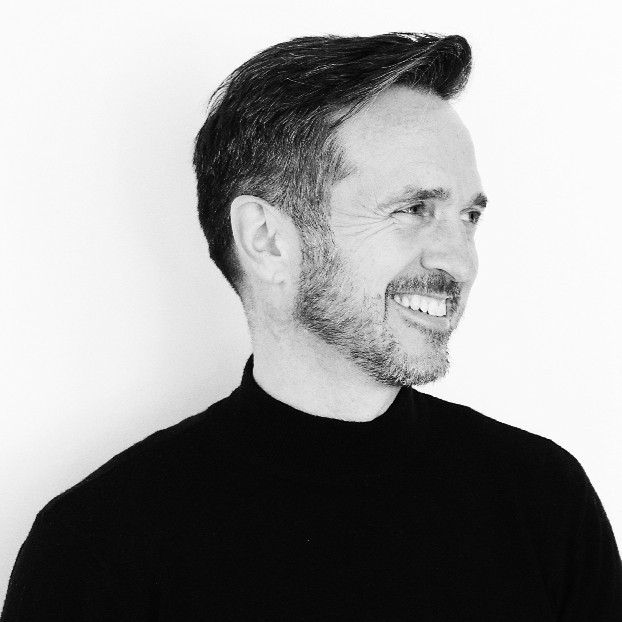
Simon Wakeman had spent nine years in the public sector and wanted back into agencies. So he did the unglamorous thing: researched the agencies near him in the southeast of England, found there weren't many, and emailed Tim Deeson out of the blue.
A couple of dinners later, both men agreed there was a way to collaborate. Neither could say what it looked like.
"My first job title officially on my contract was Director of Strategy, which is a wonderfully vague title because it doesn't mean anything or could mean everything to anyone."
That was 2014. Over the next four years Simon became managing director of Deeson, earned a minority stake, and in December 2018 sold the agency alongside Tim into The Panoply, a newly listed group on London's AIM market. He nailed the earnout early, then stepped up to run integration across the whole group, now TPXimpact, for two years. In 2023 he left to work as a fractional COO for founder-led businesses.
Accreting the Business, One Function at a Time
Deeson was growing fast and immensely profitable when Simon walked in. It was also, by his account, being held up by one person.
"It was very profitable because Tim was propping it up. He was essentially doing every single role that you would have on any agency org chart."
The job, then, was professionalization: build a team that could do those roles, and build the leadership bench an eventual exit would require. Simon did it by absorbing the agency a function at a time.
"So start off with strategy, then with marketing, then I did biz dev, then I had client services... then I did delivery, then I went with the tech team and the design team, and then I've got it all."
He describes the first year as "gradually accreting responsibility." Peter calls it something else: the definition of an integrator, someone who understands every part of the business because they've run every part of it.
There was a cultural project running alongside it. Deeson had its roots in a family business more than fifty years old and had grown paternalistic. Tim wanted the opposite: autonomy, empowerment, accountability pushed to the edge.
An integrator doesn't arrive with a title. They arrive with a vague one and earn the rest by taking work off the founder's plate.
Earning the Stake
Simon was clear from day one that he wanted equity. He was equally clear that he didn't expect to be handed it.
"I was also very clear that I didn't expect to be gifted that at the start. I felt I needed to earn it in some way, and Tim agreed with that approach."
For the first two or three years it stayed a gentleman's understanding. They talked about it occasionally. It never felt like the right time. Then, once it was obvious the business was going somewhere, they formalised it through a UK EMI scheme that recognised Simon's share as the business grew.
At exit, he was a minority shareholder.
The operator who wants a stake should say so early, then let the business prove the case before the paperwork does.
Splitting the Sale From the Business
When Tim decided it was time to sell, he told Simon plainly, and gave him a veto.
"He did say, if you don't want to do it, then we won't do it."
They discussed a management buyout. Once the sale route was clear, they made a structural decision based on advice they'd heard repeatedly: selling a business is a full-time job, and it lands at exactly the moment you need the business humming.
So they split. Tim ran the process with an advisor. Simon ran the agency, more separated from Tim than ever before.
He was brought in to meet the two serious bidders, who had very different visions for what would follow the deal. Beyond that, he stayed out of it until the decision on The Panoply was made. His job was to make the numbers unimpeachable as scrutiny on the management accounts and forecasts intensified.
He was also already thinking past close.
"To maximize our valuation, I needed to be able to say who the next Simon was."
A clean sale needs two people: one to run the process and one to run the company. Trying to do both degrades both.
Running an Earnout Inside a Listed Company
The Panoply had floated on AIM in December 2018 with four founding agencies and consultancies brought together by Neal Gandhi and Oliver Rigby. Deeson came in about two weeks later as the first acquisition and fifth business, alongside Manifesto, a competitor Deeson had pitched against for years.
The pitch to founders was a holding company model: run independently, keep your autonomy, and pitch together under the group brand for work that was too big for any of you alone.
Simon felt the shift from answering to a friend to answering to a market.
"I felt it. I don't think the team felt it particularly."
The monthly reporting, the forecast scrutiny, the knowledge that Deeson's figures were being rolled up into public releases: all of that landed on Simon. The agency was performing, so the questions were about doing better, not underperformance. But something changed anyway.
"Suddenly we had some autonomy, we could still do our thing, but ultimately that sense of ownership disappeared."
The earnout target was Deeson's revenue and profit. Simon refused to push that number down onto the team.
"The earnout really was the result of what we did. It wasn't a goal in itself."
The message was: we built a machine that wins, onboards, manages accounts and delivers profitably. Keep doing that, do more of it, do it well, and the numbers follow. Deeson finished the earnout ahead of time.
Push the target down and the team feels an earnout. Push the fundamentals down and the team feels business as usual.
From Chaos to Machine, Twice
Simon handed the MD role to his successor at the start of March 2020. About three weeks later, nothing was normal.
The Panoply leadership went into emergency mode while still acquiring businesses. Simon, mid-exit from his own role, was in the middle of it.
"I could start to see the picture of how this bigger machine of which we were part should work, but also I could see where it wasn't working."
He'd taken Deeson from chaotic to organised. He was now doing the same thing to a group, though he only saw the pattern in hindsight. By September 2020 he was in the group integrator role, which he held until he left.
What kind of person volunteers for that?
"I just like fixing things and I like taking things that look unsolvable and trying to move them forward."
Organisation, in his view, isn't tidiness for its own sake. It strips friction away from where value gets made, so energy goes into clients instead of internal heat.
The integrator's satisfaction is a business that runs. The integrator's job is to keep chasing a state most businesses never fully reach.
What the Pivot Cost
Here is where the conversation turns candid.
The Panoply, now TPXimpact, made a strategic pivot from holding company to integrated business. That is hard anywhere. Two things made it harder.
First, most of the founders still had earnouts. They were doing exactly what Simon had done: fighting for their own corner. That was rational under the old model and directly counter to the new one.
Second, and more human, those founders had been sold autonomy.
"That strategic pivot happened very quickly and with hindsight too quickly. We didn't take some of those founders on the journey."
Some would never have come along. But some were lost because they ended up somewhere they'd never agreed to work.
Four years on, Simon has a sharper view of who survives an integration: the founders who thrived at TPXimpact tended to have prior large-company experience and knew how to operate where you can't just decide to pivot and go.
Then he names the thing deal conversations skip.
"They don't talk about what do you lose when you sell your business? You lose autonomy, you lose the flexibility, you lose sometimes the status that you have as the founder."
Peter's framing: a business isn't the owner's baby. It's a version of the owner. Selling it means selling that version of yourself, and you will be rebuilding a new one afterward whether you planned to or not.
When integrations fail, it is often because nobody was honest up front about what the founder was giving up.
Listen Harder, Move Slower
Asked what he would tell his earlier self, Simon offers two lessons.
The first is listening. The board and founders wanted an integrated business, and Simon went straight at the how.
"We did some listening, but minds were made up and we went. And that was our first mistake."
He heard things he didn't weigh properly. Brand was one. The push to get everyone under the TPXimpact name ignored what individual brands were worth in winning and servicing clients, and what identity they gave to different tribes inside the group. The digital experience unit, in his words, had the heart ripped out of it and has since rebranded back to one of the original names.
The second is pace.
"We broke too much and moved too fast."
The result was a performance dip with material consequences. Simon is even-handed about it. Some changes genuinely required ripping the plaster off. But they tried to change everything at once, and management energy is finite.
"It's taking away from pitching, it's taking away from winning, it's taking away from effective delivery."
Concentrate change where it's essential, leave what's working alone for now, and accept that every unit of energy spent on transformation comes from somewhere else.
Every Visionary Needs an Integrator
So how does a founder find a Simon? You may already have one.
"The best integrators I know are generalists, so they will have come up through one route in the business, but they'll have taken interest in others."
Look for someone who has covered a department during a leave or done a secondment, and doesn't take a tribal view. Then protect the relationship, because the tension is structural.
"The founder will always want to go faster, always more radical, always wanted to pivot. The integrator will be understanding that, but also saying, we've got to slow down."
Simon is blunt about what he brings alone.
"If it was just the integrators like me, I'm rubbish at building businesses that are going to go somewhere. But if you pair me with someone that's got that vision, I'm really good."
As Peter put it, every entrepreneur is a visionary in some capacity. Not so many visionaries have an integrator.
A founder without an integrator is running on half an engine. The pairing is the thing that increases the probability of the outcome.
Two Things to Fix First
After leaving TPXimpact, Simon set out to write a book. He ended up building something more useful: the B3 framework, a set of elements every business needs in place, which he describes as the resource he wishes he'd had in 2015 when he first started thinking of himself as an integrator. He now uses it as a ten-day operational audit for founders, and in due diligence for buyers.
"If I can help people understand operationally what they're buying, then they can see the shortcomings."
What does he fix first?
"Be clear how work gets done. So understand the chain of things you do repeatably to create value. And then be clear how that accountability maps to people."
Not every process. He is emphatic about that. Just the core workflow where value gets created, which in most agencies lives in people's heads or gets confused with the software that tracks it.
Make the workflow explicit and make accountability explicit. Those two things take a business a long way.
Listen to the Full Conversation
Hear Simon Wakeman explain how he earned his way from a vague job title to a stake in Deeson, why he and Tim Deeson split the sale from running the business, what changed when the earnout was being reported into public markets, and what the TPXimpact integration taught him about founders, brands and pace, on the Agency Acquisitions & Exits Podcast.
You can find Simon at simonwakeman.com, where you can book a call directly.