
Most agency owners who want to acquire a business know that they want to do it. What they don't know is how: the actual sequence of steps, decisions, and conversations that take a deal from a cold outreach to a signed agreement and a clean handoff.
That gap isn't a motivation problem. It's a process problem.
The Lang Acquisitions Programmatic M&A Playbook exists to close it. It's the operating system behind every acquisition our clients have closed: a repeatable, stage-by-stage framework built specifically for business owners who want to move with confidence, not guesswork.
Here's what that process actually looks like from the inside.
1. It Starts Before You Find a Deal
The most common mistake first-time buyers make is jumping straight to "finding deals" without doing the foundational work first. They start browsing listings, sending cold emails, and taking meetings, without a clear understanding of what this acquisition will do to their company, or any sense of what a good deal looks like for their specific situation.
The Lang Acquisitions Programmatic M&A Playbook starts here, before any outreach happens.
That means getting clear on:
Your acquisition thesis: Why are you buying? To add a service line? Enter a new market? Accelerate revenue? The answer shapes every decision downstream.
Your target criteria: Revenue range, geography, service type, client concentration, team size. The sharper your criteria, the faster you qualify (and disqualify) targets.
Your deal capacity: How much capital can you deploy? What structures make sense: seller financing, SBA, earn-outs, or some combination? Knowing this before you meet a seller is the difference between a credible buyer and a tire-kicker.
Pro Tip: Your thesis isn't just strategic clarity for you, it's a selling tool. Sellers want to know their business is going to the right buyer. A clear, confident thesis makes you that buyer.
2. Finding Real Deals (Not Just Listings)
Most agency deals don't happen on business-for-sale marketplaces. They happen through direct outreach to owners who haven't listed yet, don't know they're ready to sell, or are quietly looking for the right conversation.
The Lang Acquisitions Programmatic M&A Playbook teaches buyers how to source from that pipeline, not just react to what's already public.
That means building an outreach system that:
- Targets sellers by service type, geography, and size
- Uses sequenced, non-pushy messaging that leads with curiosity, not offers
- Qualifies leads quickly so you're spending time on real opportunities, not dead ends
Watch-Out: Volume without targeting is noise. Sending 200 cold emails to the wrong agencies wastes weeks and damages your positioning. Targeting 40 well-qualified owners with a thoughtful sequence closes deals.
3. Evaluating What You're Actually Buying
Once a seller is engaged, the evaluation phase begins, and this is where most first-time buyers either move too slow, look at the wrong things, or take the financials at face value without understanding what's underneath.
The Lang Acquisitions Programmatic M&A Playbook breaks evaluation into two stages:
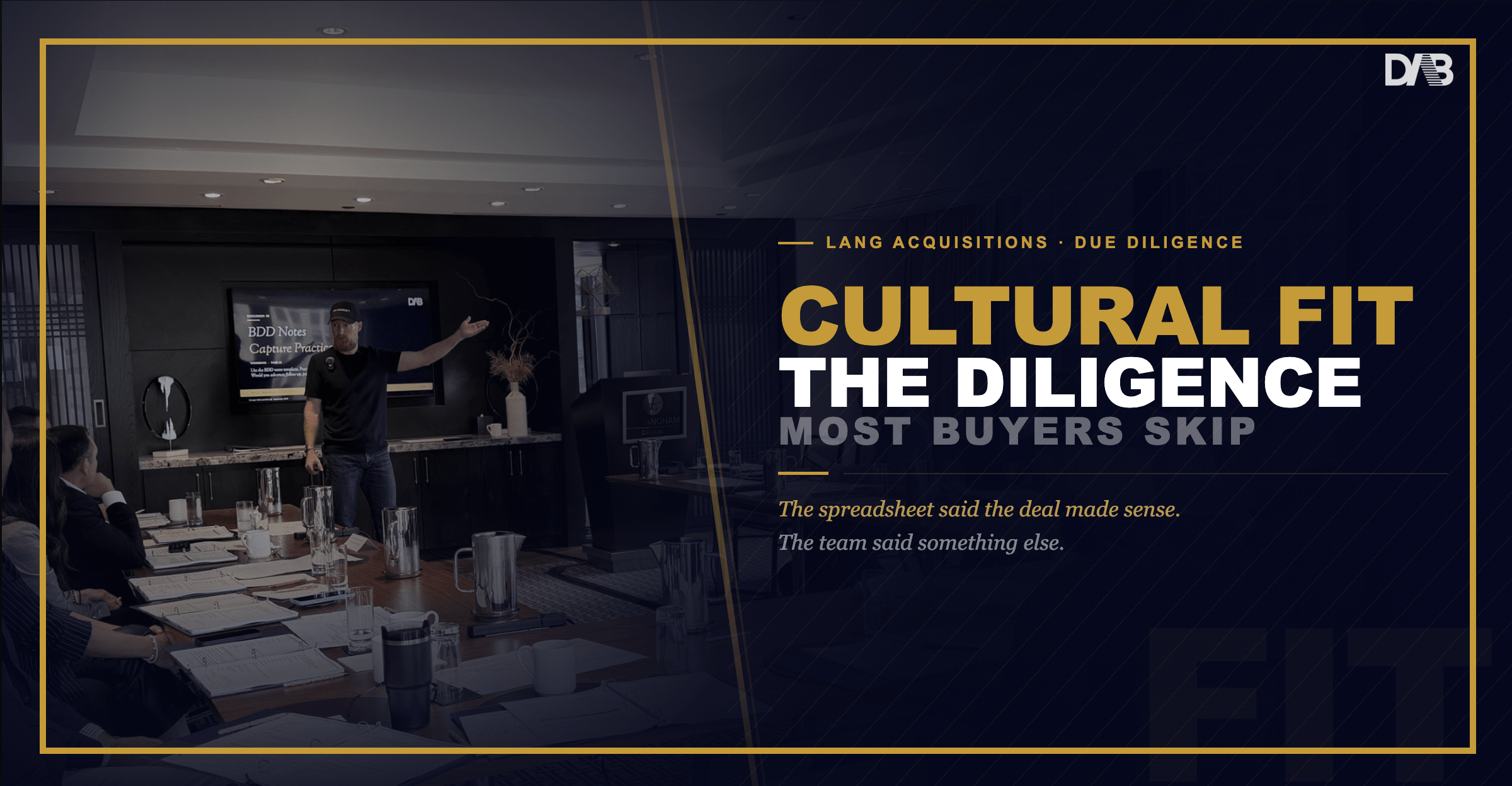
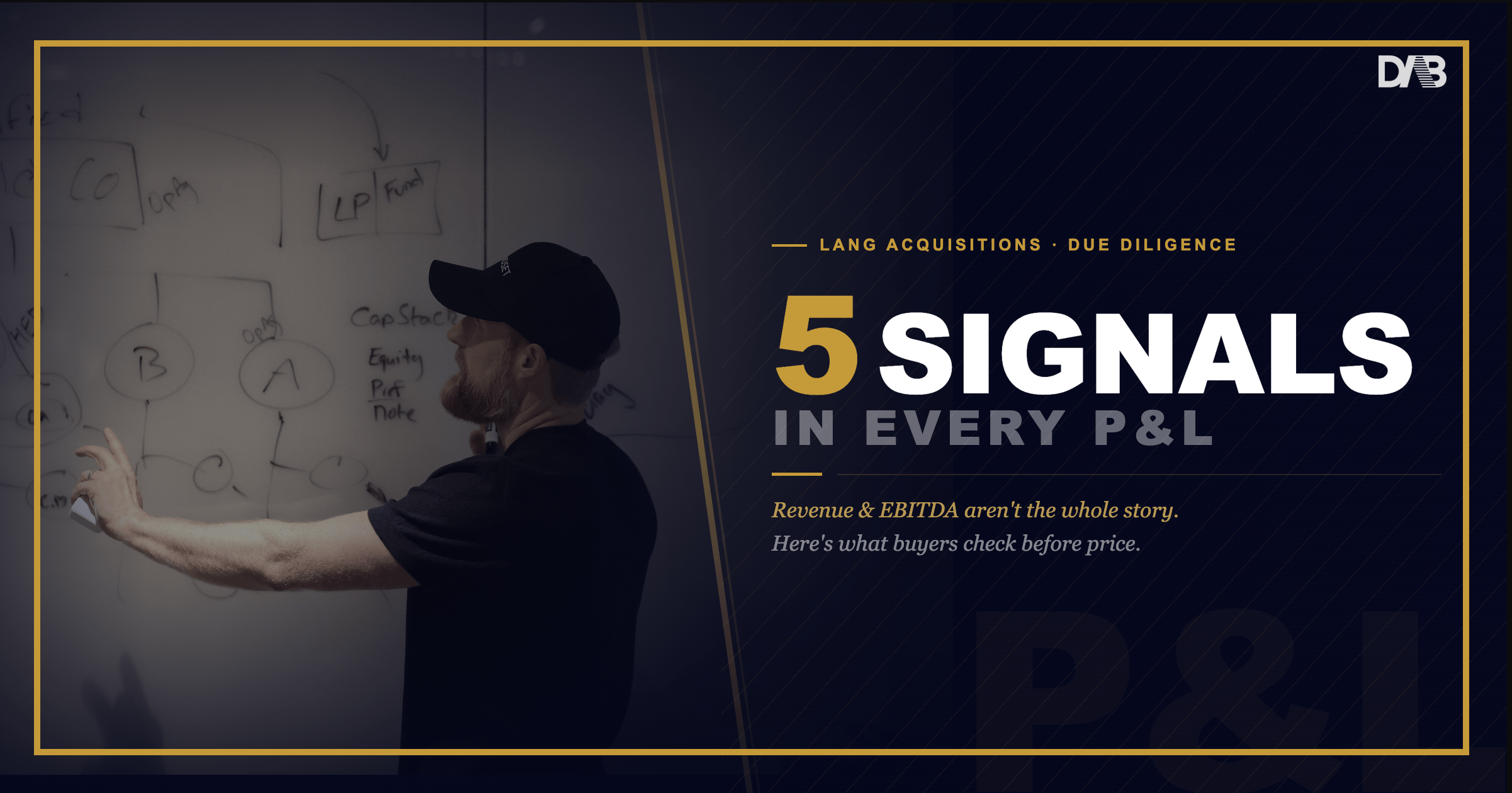
Preliminary diligence: An initial pass at the headline numbers and risk factors. Revenue trend, EBITDA margins, client concentration, key person dependency, team structure. The goal here is to determine if the financials make sense, work on some financial modeling and if right move on to LOI.
Confirmatory diligence: The deep dive. Contracts, client retention data, tech stack, operations, legal exposure, transition risk. This is where you validate the thesis, identify the landmines, and build the picture that informs your final structure.
Pro Tip: Your diligence checklist is also a trust signal. Walking a seller through your process: what you'll need, what you'll look for, and why, signals that you're a serious operator. Sellers don't just want the highest bid. They want a buyer who knows what they're doing.
4. Structuring the Deal
This is where most buyers without a playbook get into trouble. They find a deal they like, agree on a number, and hand everything to a lawyer, without ever understanding whether the structure actually works in their favor.
The Lang Acquisitions Programmatic M&A Playbook gives you a framework for building deals that protect your cash flow and de-risk the transition.
That means understanding the full toolkit:
Asset vs. equity purchase: The difference matters enormously for liability, tax treatment, and what you're actually taking on. This isn't a detail to leave to your attorney.
Seller financing and earn-outs: Most small agency acquisitions don't require a full cash-at-close payment. Understanding how to structure seller notes and performance-based earn-outs lets you close deals you couldn't otherwise fund.
LOI mechanics: Your Letter of Intent isn't just a placeholder. The terms you put in, or leave out, set the tone for everything that follows. Price, exclusivity period, contingencies, transition timeline. Each one is negotiable, and each one matters.
Watch-Out: A deal that looks great at the top line can destroy your cash flow if the structure is wrong. If you can't model the payments against your projected revenue post-close, you're not ready to sign.
Want to See This Process Broken Down Step-by-Step?
If you're still piecing this together on your own, start with the FREE 21-Day Email Course for Agency Buyers.
It walks you through the exact process one step per day so you can go from “I think I understand this” to actually running your first acquisition.
5. Closing Without Surprises
The close phase is where a deal either comes together cleanly or starts to unravel, usually because something wasn't defined clearly enough earlier in the process.
The Lang Acquisitions Programmatic M&A Playbook walks buyers through the final stretch: legal documentation, the Asset Purchase Agreement, and the mechanics of transferring ownership in a way that protects both parties and sets up a clean integration.
Key things to have locked before you close:
- Seller transition commitments (what is the owner committing to in 30, 60, 90 days)
- Key employee retention (are the people who make the business run staying?)
- TSA terms (what support does the seller provide post-close, and for how long?)
- Client notification plan (a botched client communication at close can cost you accounts on day one)
Pro Tip: Your attorney's job is to execute and protect, not to lead the strategy. If you walk into the legal phase knowing what you want in the APA, you'll move faster, spend less, and avoid signing something you don't fully understand.
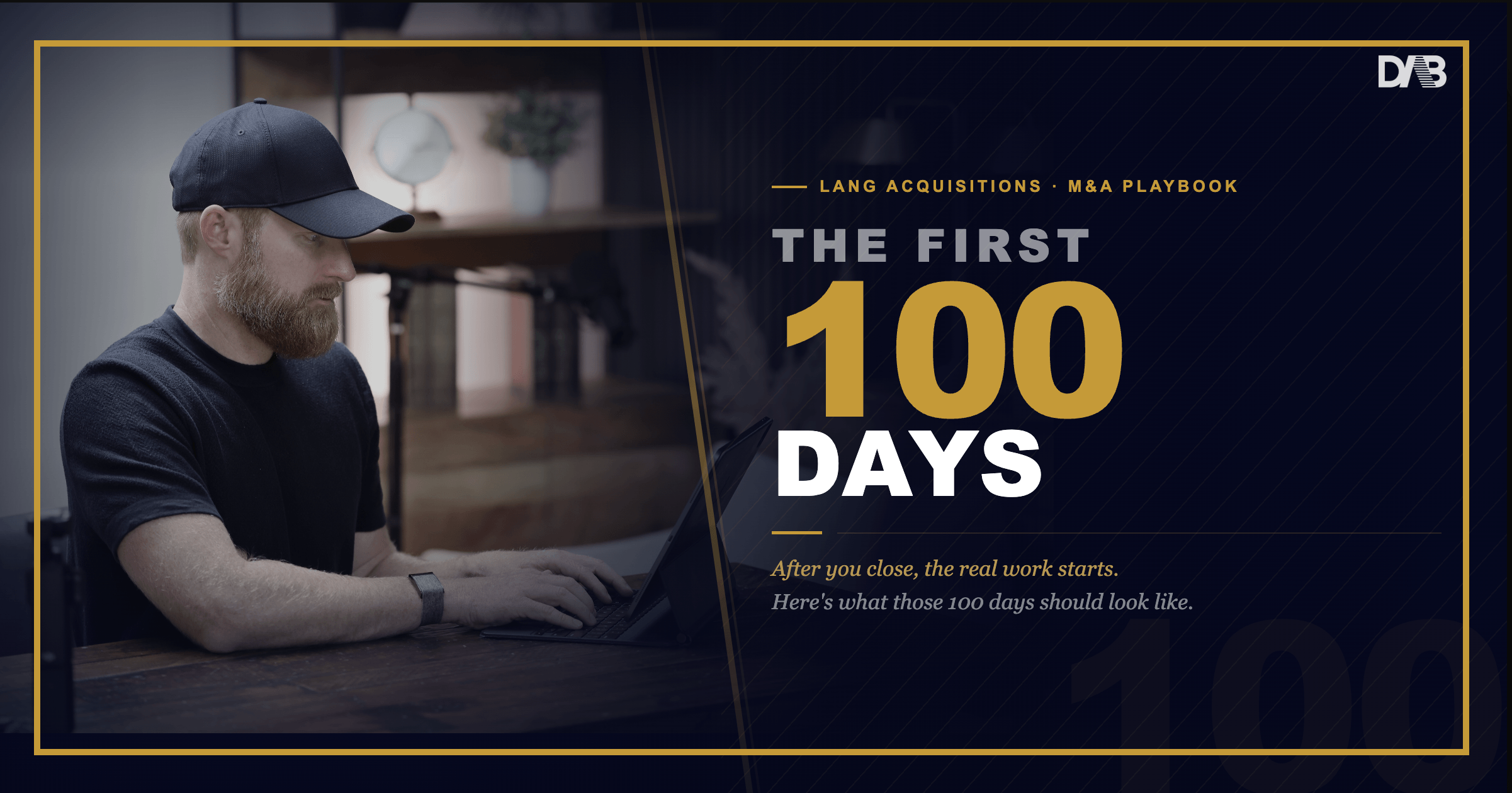
6. The First 100 Days Are Part of the Deal
Closing isn't the finish line. For most acquisitions, the real work, and the real risk, lives in the first 100 days post-close.
The Lang Acquisitions Programmatic M&A Playbook includes a full integration framework because buying well doesn't mean much if you can't hold what you bought. That means a day-one plan for clients, a communication strategy for staff, and a clear operating model for how the acquired business runs inside your own.
The buyers who get this right aren't just lucky. They planned for it.
Watch-Out: The biggest integration failures happen when buyers assume the business will just "keep running." It won't, not without deliberate attention. Your first 100 days need a roadmap before you close, not after.
Final Thought
Deals don't fall apart because buyers had bad intentions. They fall apart because buyers didn't have a process and at some point, improvisation runs out.
The Lang Acquisitions Programmatic M&A Playbook is what replaces improvisation. It's the same framework that private equity has always used internally, adapted for agency owners who are ready to think like investors and build through acquisition.
When you know the stages, understand the levers, and walk into each phase with a plan, you stop reacting to the deal and start running it. That's when acquisitions become repeatable, and when building through M&A stops feeling like a risk and starts feeling like a strategy.
Ready to stop guessing your way through acquisitions?
Explore the FREE 21-Day Email Course and learn the exact process for finding, evaluating, structuring, and closing agency deals with confidence.
Already inside the DAB community?
Join our upcoming live events and put the playbook into action alongside other acquisition-minded agency owners who are actively working real deals.