
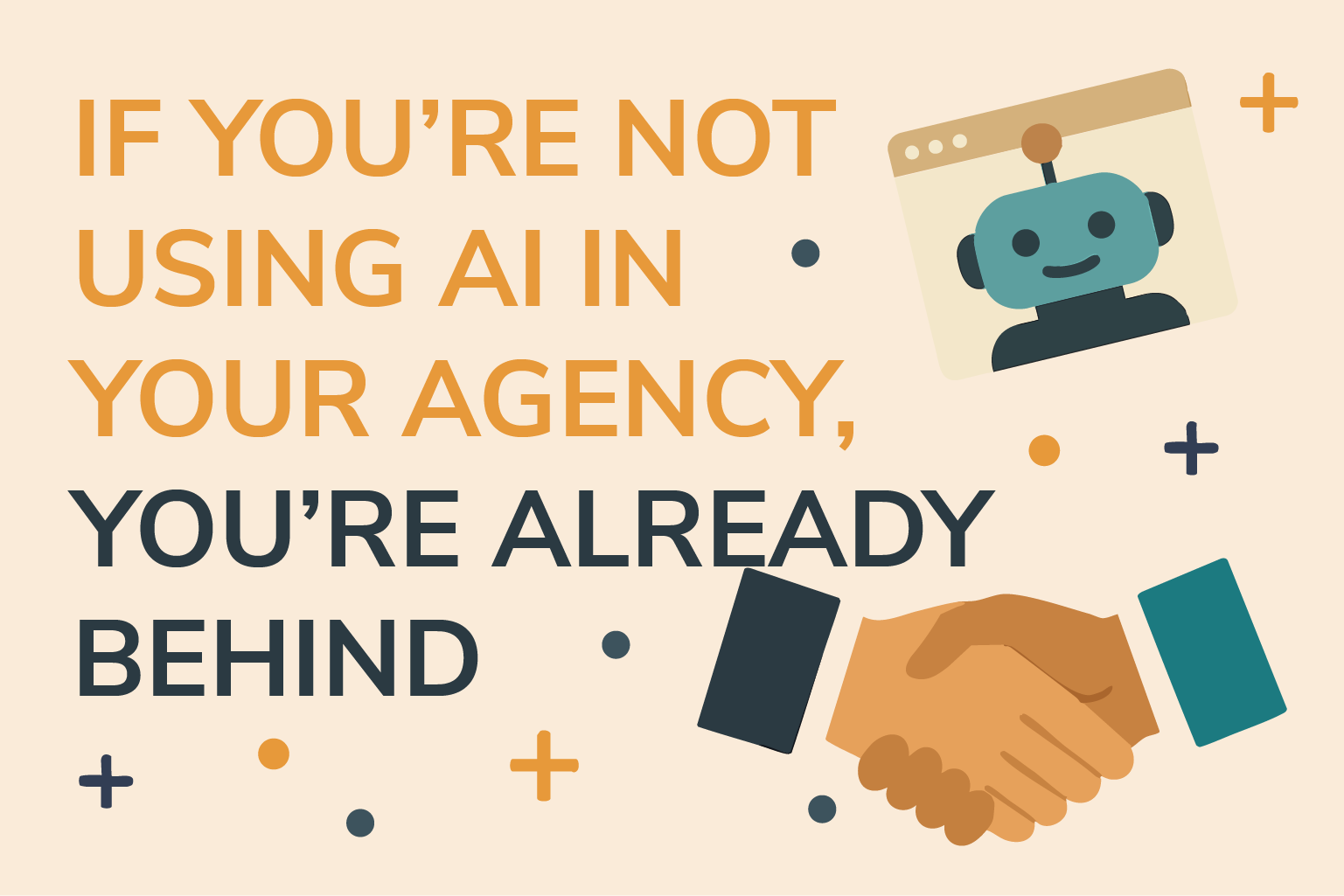
Artificial Intelligence isn’t just a new tool in digital marketing, it’s reshaping how agencies operate, make decisions, and create client value.
We’ve officially entered a new era where creativity, data, and automation converge – and those who adapt early will define the next decade of marketing leadership.
In this post, we’ll unpack how AI is transforming digital marketing across strategy, execution, and operations – and how agencies can position themselves ahead of the curve.
1. From Data Overload to Intelligent Insight
Digital marketers have long been inundated with data but starved of actionable insights.
Campaign dashboards, CRM analytics, and ad reports often provide information without clear direction.
AI bridges that gap.
With machine learning and predictive analytics, agencies can now interpret massive data sets in real time – identifying what’s driving conversions, predicting customer behavior, and allocating ad spend more effectively.
Examples of Intelligent Data Application:
- Predictive audience modeling in Meta and Google Ads optimizes targeting before campaigns even launch.
- Attribution AI platforms like Rockerbox or Segment uncover which touchpoints actually drive ROI.
- AI dashboards consolidate performance data and flag anomalies – turning reporting into strategy.
This isn’t about more data – it’s about smarter decisions, faster.
2. Hyper-Personalization at Scale
AI allows agencies to personalize experiences across millions of touchpoints – something human teams alone could never achieve.
Through natural language processing and recommendation algorithms, brands can deliver messages that feel one-to-one, even when reaching thousands.
AI Tools for Personalization:
- Dynamic website content that adapts based on user intent created with Persado.
- Personalized email campaigns built with tools like Clay.
- AI chatbots that understand customer emotion and tailor interactions.
For agencies, personalization is no longer a “nice-to-have” – it’s table stakes. AI makes it scalable.
3. Reinventing Creative Workflows
AI doesn’t replace creativity – it enhances it.
Modern creative teams use AI to generate drafts, ideas, and variations that dramatically shorten production cycles.
AI Tools for Creative Workflows:
- Visual generation tools like Adobe Firefly accelerate concept development.
- AI copywriting assistants like ChatGPT or Copy.ai help teams brainstorm, refine, and adapt brand voice faster.
- Video editing tools such as Runway or Pika streamline production with auto-cuts, captions, and scene generation.
When used right, AI unlocks more creativity, not less – freeing teams to focus on concept and strategy instead of grunt work.
4. Smarter Ad Optimization
Campaign optimization has always been part science, part art – but now, AI automates the science.
Applying AI to Ad Optimization:
- Meta Advantage+ and Google Performance Max campaigns use machine learning to continuously test creative and placement combinations.
- Bid optimization tools adjust spend by audience and time of day in real time.
- AI-generated creative insights analyze which visuals and messages convert best.
The agencies leveraging this tech aren’t just improving performance – they’re redefining speed to insight.
5. Redefining Client Experience
Clients expect instant answers, proactive insights, and transparency – and AI makes it all possible.
AI-powered client portals and dashboards are now replacing traditional reporting cycles, giving clients 24/7 visibility into metrics that matter most.
Agencies using tools like DashThis, DataBox, or even custom GPT-powered portals are turning reporting from a chore into a competitive differentiator.
6. Building the AI-Enabled Agency
The future agency isn’t the one with the biggest team – it’s the one with the smartest system.
That means integrating AI across every department: strategy, sales, creative, media, and operations.
Here’s what that looks like:
- Centralized data systems connected to AI analytics.
- Creative and production pipelines supported by generative tools.
- Sales and client communication enhanced by smart assistants.
- A culture of experimentation where teams learn to prompt engineer rather than resist automation.
The agencies thriving today are those designing workflows that combine human intelligence with machine precision.
Final Thought
AI is not merely a fleeting trend; it’s the fundamental shift in how digital agencies will achieve growth, scale, and competitive advantage. Those who adopt it will proactively operate with greater agility, deliver more intelligent services, and produce work that is more, not less, human-centric.
If your agency has not yet developed its AI strategy, the time to do so is now. The future of marketing will not be created from the ground up; it will be trained.