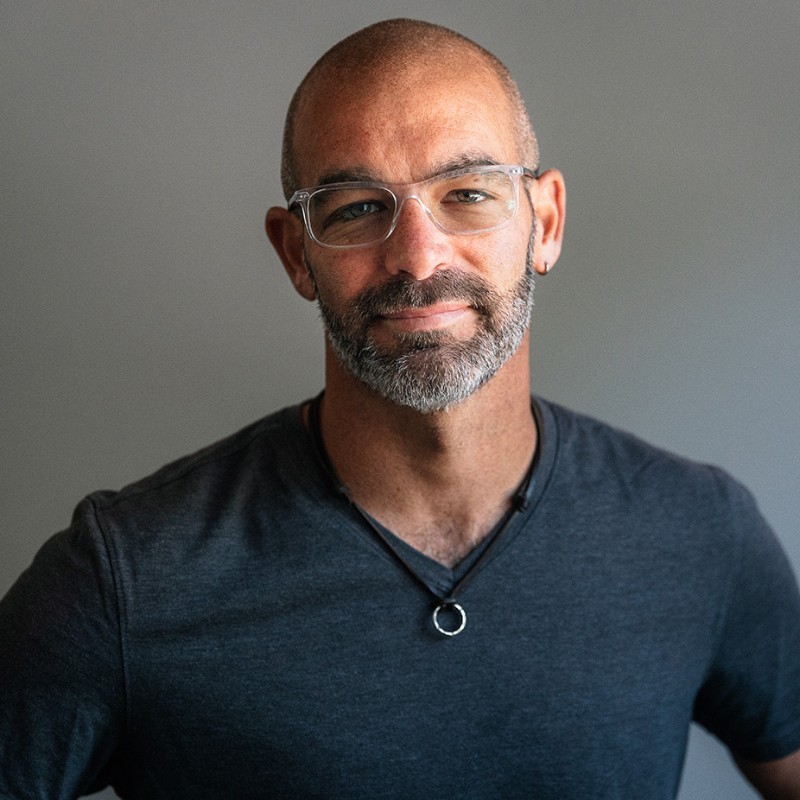
Steve Guberman didn't know he was doing M&A. He just knew a friend needed a way out.
He was two or three years into running his own agency at the time, deep in the grind every agency owner knows: chase net-new business, survive attrition, hope the math works out to 20% growth for the year. "Every agency I worked at stunk and every boss I had stunk," he says of why he started the business in the first place. "So I figured I'd be better at it." What he didn't figure was how to actually run one. That part came later, through years of hard work and hired coaches.
The first acquisition wasn't part of any strategy. It landed in his lap.
The Deal With No Money Down
A local friend had run her own agency for about 15 years. She was burnt out and ready to go get a job. She asked Steve if he wanted to buy her business.
He didn't have the capital most people assume you need. "The roadblocks were there as they are with most people," he says. "If I don't have a million dollars or I can't afford that, just the immediate impossible mindset." Instead of walking away, they structured something else entirely: Steve would pay her on a straight commission plan over two years, calculated on all business that successfully converted. Her one condition was that her single employee be taken care of. Steve needed an employee anyway. It fit.
The commission stepped down over the two years, starting around 20% and dropping toward 10%, paid out only as clients actually stuck around. Steve put no cash out of pocket at all.
The deal added roughly 30% to his revenue in one move, a number he now uses deliberately with his own clients when structuring acquisitions today. Most of the acquired clients stayed for years. Some drifted off, which was fine. A handful were still with the business seven or eight years later, long after Steve had exited it himself.
Part of what made the deal work was who came with it. The employee he "bought" was a graphic designer who also managed a large share of the client relationships, which meant the accounts were already primed to transfer smoothly.
Why a Seller Says Yes to Zero Cash
The instinct most people have, Steve says, is that no legitimate owner would ever sell a business for nothing upfront, that only distressed businesses go that route. He doesn't buy that framing.
The difference, he says, comes down to what the seller actually believes their business is worth. Owners who are emotionally attached tend to inflate the number in their heads. His friend wasn't one of them. She understood exactly what she had: a client base, not a business built for a large exit. There was no illusion of a big check. Steve was upfront that he wasn't sitting on cash reserves either, something closer to 60 days of runway. An SBA loan wasn't something he seriously considered at the time, though looking back, he thinks it might have made sense.
For her, the commission structure wasn't a compromise. It was money she wouldn't have made otherwise. The alternative was shutting the business down. That same choice, sell or shut it down, still shows up constantly in the agencies Steve works with today. He doesn't think it has to be a binary.
They knew each other the way most first deals happen: as local competitors. They'd pitched against each other for the same clients, crossed paths through the Chamber of Commerce, existed in the same small professional world. Steve is quick to point out that this is exactly where most first acquisitions come from. Not cold outreach, not a banker, but the network already sitting around you.
The Unlock He Didn't Recognize
What's notable about the deal isn't just the structure. It's that Steve didn't understand, at the time, that what he'd done had a name.
"I didn't realize what I was doing as a sophisticated method of growth. I just thought this was dumb luck," he says. He points out the irony himself: both of his parents were entrepreneurs, and his father was literally a business broker. If anyone should have clocked that this was M&A, it was him. It didn't click.
Part of that, he thinks, was where his head was at the time. He was still a working creative, still running design projects, still operating as creative director rather than thinking like a CEO. It wasn't until five or six years in that he got far enough out of day-to-day production to see the business with any distance. Had that shift happened earlier, he believes he would have recognized the opportunity sitting in front of him, more sellers in the same position as his friend, and built toward something considerably larger than the roughly $1 million in revenue the agency eventually reached.
That's the regret that shapes how he coaches founders now: not the deal itself, but how long it took him to see it as repeatable.
The Exit: A Road Show to a 30-Year-Old PR Firm
By year six or seven, Steve had built a real team around him, a project manager, an account manager, roughly eight to ten people, and had genuinely stepped out of the day-to-day. Revenue crossed the million-dollar mark around year eight or nine. In year ten, he sold.
He didn't run a formal process with a banker. He pitched the agency himself, the same skill he'd always loved as an owner, to nine local agencies he'd known for years, some run by second-generation owners whose parents he'd also known. He came away with three offers.
He ultimately sold to a 30-year-old PR firm he'd known for years through shared clients and referrals, a firm that had weathered its own partner mergers and splits but had been stable for roughly two decades. He was their first acquisition.
His team didn't come with him. They didn't want to move to a traditional PR shop; the culture gap felt too wide for a group that identified as a creative studio. Steve respected the decision and helped several of them land their next roles, staying in touch with many to this day.
The exit itself wasn't the massive payday some owners chase. It didn't need to be. "It was not an exit that was life-changing money, but it was life-changing in that it was at the time of my life where I was burnt out being an owner," he says. What he wanted was simpler: benefits, payroll handled, no longer being personally responsible for feeding a team of people.
Learning to Be an Employee Again
The deal included cash at close and a two-year earn-out on both transferred and net-new clients, with net-new business commissioned in perpetuity. Terms he now recognizes as genuinely favorable. He stayed on as VP of Creative and Digital, building out services the PR firm had never offered before: creative, digital, a rebrand of the agency itself.
The adjustment took roughly two years. Steve describes it as learning where his responsibility actually stopped. As a founder, if something felt broken, he said something. As an employee without equity or a seat at the ownership table, that instinct wasn't always welcome. "I struggle with that because I want to see everybody succeed," he says of learning the boundary between contributing and overstepping.
The cultural gap was visible from day one. Steve's old studio had no walls outside the conference room and a soundtrack of Beastie Boys most nights. The PR firm's owners wore suits, worked from a long wooden table with leather chairs, and decorated their conference room with framed pictures of bridges. Not a bad environment, Steve is careful to note, just a completely different one.
He stayed for three additional years beyond the earn-out because the work was good and the business was doing well. Looking back at the acquisition as a strategic move by the PR firm, Steve rates it highly: a complementary service line, built on real client overlap in consumer tech, banking, and nonprofits, that the firm still runs a decade later. The one thing he'd flag is that creative and digital work initially ran at lower margins than the firm's traditional PR retainers, since much of it started as project work before converting to retainer, and it took time to find real profitability.
What He Actually Loved About Owning an Agency
Ask Steve what he misses, and the list isn't abstract. He loved pitching, win or lose, chasing the thrill of it. He loved late nights brainstorming with his team, music on, watching people come up with ideas he had nothing to do with. He loved seeing his team grow into people who could push past what he'd taught them.
He also loved firing clients. When the agency niched down into a handful of verticals, saying no to bad-fit accounts became a source of confidence for the whole team, something he now actively encourages the founders he coaches to do more of. And he loved protecting his team from the clients everyone quietly agreed were toxic.
What he didn't love: payroll cycles, and having to lay people off.
From Operator to Board Advisor
Today, Steve coaches agency owners, and over the past 18 months has layered in M&A readiness and advisory work to help owners execute acquisitions with real enterprise value in mind.
The line he draws between coaching and board advisory work is mostly about where the owner already stands. Coaching, in his framing, is operational: finding the profit that should already be there, helping an owner get out of the day-to-day. Board advisory work starts further down the road, once the leadership team is in place and the owner is already out of production, ready to chase 50% to 100% annual growth instead of the 20% ceiling that organic growth tends to hit after attrition.
His advice to owners looking to grow through acquisition is blunt: get out of the day-to-day first. M&A takes real time and attention, and an owner still buried in client work can't give it either. Beyond that, it comes down to conversations. Steve tells founders to go through their LinkedIn connections and identify businesses a third their size to buy, or three times their size to potentially sell to, then simply reach out. Casual, low-pressure, "how's business going" conversations are, in his experience, how most real deals start.
For owners on the other side, fielding an inbound offer, his advice is the same instinct that guided his own decision a decade ago: get to know the buyer as a person before anything else. Ask around. Understand how they run their team, whether they lead with integrity, whether their values actually match yours. Even when a specific offer isn't the right fit, he pushes founders to have the conversation anyway, just to understand what acquirers are actually looking for, whether that's the IP, the team, the book of business, or the EBITDA.
"I do think it's a rare lightning in a bottle kind of thing," he says of the moment an owner realizes acquisition growth is available to them. "And when people realize it, they're like, this is what I want to do."
Looking Back
Steve is candid that his biggest regret isn't the deal itself, it's not recognizing sooner that it was repeatable. There were, in his words, dozens of owners in his friend's exact position that he could have approached in the years after that first acquisition. Had he understood the mechanics of enterprise value at the time, he believes that first deal could have compounded into something considerably larger than the business he eventually sold.
It's the gap he now spends his time closing for other founders: getting them out of the weeds early enough to see the acquisition sitting in front of them before it becomes a regret instead of a plan.
Listen to the Full Conversation
Hear the full story of how Steve Guberman bought his first agency for zero dollars down, sold a decade later to a 30-year-old PR firm, and now advises agency owners on M&A, on the Agency Acquisitions & Exits Podcast.