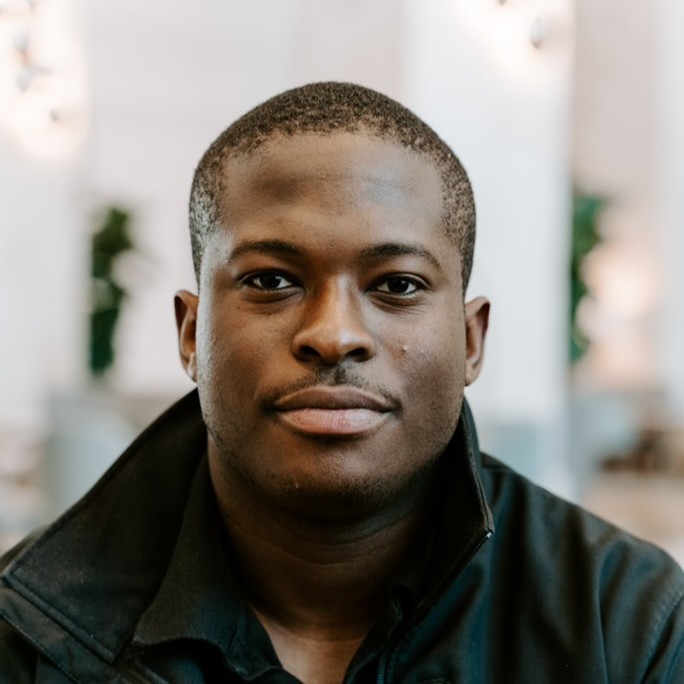
Dennis Onalaja doesn't tell his entrepreneurship story the way most people do.
He doesn't start with a vision. He doesn't start with a mentor or a pivotal book. He starts with a broken iPhone, a $50 gift card from his aunt, and the irritating realization that whoever was charging $80 to fix screens was almost certainly not paying $80 for the part.
He was 14. He had no car, no experience, and after buying the screen off eBay, no ability to actually fix the phone yet. He told everyone he could do it anyway. And then he figured it out when a customer showed up.
That detail matters. Not as a cute origin story, but as the operating system Dennis has been running on ever since. Assess the risk. Decide it's worth taking. Move. Learn by doing, not by preparing to do.
Thirteen years later, he's running Equity Firm Capital, building a lower-middle-market holdco of B2B and healthcare agencies under a unified brand — Modern Growth Partners — and doing the kind of programmatic M&A that most operators don't encounter until much later in their careers, if ever.
I sat down with Dennis to trace the full arc: from phone repair to his first business exit in high school, through a Webflow agency acquisition he did with zero legal support, to a mental health clinic roll-up, to the moment he flew across the country on four hours' notice to spend eight hours in a room learning everything he could about agency M&A.
It's a story about what it looks like to build a private equity career without the traditional path and what becomes possible when your default setting is action.
The Business He Built Before He Had a Driver's License
The iPhone repair business wasn't an accident. It was a solution to a specific, recurring problem: Dennis kept breaking his phone and couldn't afford to fix it on $20 every two weeks.
Once he figured out he could source screens from eBay for a fraction of the repair shop markup, the math was obvious. He started telling people he could fix phones. Then he started fixing phones. Then the referrals came.
By the time he was done with it, the operation had expanded to 14 cities. He was coordinating pickups, managing people who drove for him, and running something that functioned like a business long before he would have called it one. He was paying people to borrow their cars. He had employees without knowing what an employee was.
"I didn't even really consider myself an entrepreneur until later on," he told me.
That's a pattern worth noting: Dennis repeatedly builds things without stopping to label them. The label comes later. The doing comes first.
The First Exit and What It Felt Like
Before university, Dennis joined a friend in building a peer-to-peer tutoring platform. The model was simple: students who were strong in a subject would tutor others in their classes for a fee. Dennis contributed marketing and growth. They scaled it, and right before college, they sold it.
It wasn't a life-changing number. But it was something else: proof of concept for a feeling he'd carry forward.
"I felt the effects of actually selling a business," he told me. "Weights lifted off my shoulders."
That's the thing about first exits, even small ones. They reframe what's possible. You stop thinking of a business as something you build and operate and think of it as something you build, grow, and eventually hand off at a multiple. The category changes. And once it changes, it's hard to unsee.
Dennis went to UT Austin for marketing, which he describes as less of a plan and more of a last-minute honest self-assessment after his mother insisted he apply the day before the deadline. He got in. He kept fixing phones to fund his time there. He kept launching companies.
The Webflow Acquisition He Did With No Legal Support
The first formal agency acquisition Dennis made came in 2022, the way a lot of early entrepreneurial deals come: through a conversation that ended with someone asking a question he hadn't been asked before.
A founder he knew, a Webflow developer who was good at the technical work and openly uninterested in running a business, threw out a number one night and asked if Dennis wanted to buy the agency.
Dennis's answer was not a careful financial model. It was: what can I actually lose here? The number was manageable. He believed in the underlying capability. He had been doing adjacent marketing work through his own setup. He said yes.
"I have a very big mentality of less thinking, just doing," he told me. "So I was like, I've never bought a company. He threw out a number, and I said — might as well."
A month later, he'd wired the money and owned the business. No lawyers. No formal QoE. Some research online and a belief in the product.
He's the first to acknowledge it wasn't the right process. But it was the right action. It put him in the seat of an agency owner with real skin in the game, at a moment when his understanding of what he wanted to build was starting to sharpen.
From Operator to Acquirer
The Webflow agency gave Dennis his first real taste of what happens after the wire goes through. And what he discovered was that being a pure operator wasn't what he was built for.
It wasn't that he was bad at it. It's that he found himself drawn to the bigger frame: the one where instead of running a single business, you're running a portfolio. Where every company you own is a platform rather than a ceiling.
"I always wanted to start new businesses, look for new opportunities," he told me. "And I would kind of exhaust myself within those businesses."
This is something I hear often from entrepreneurs who eventually find their way to M&A. They're not job-hoppers or flaky operators. They're zero-to-one people who get pulled relentlessly toward the next problem. The acquisition model, done well, is a way to harness that instinct rather than fight it. You build the thesis. You find the platform. You bring in the operators. You do it again.
Dennis started looking for that model in earnest around 2022. He found a course on fund structures. He enrolled in a private equity certificate program through Wharton. He started posting about it on social media, specifically on Snapchat, where he'd built up a community of entrepreneurially-minded people he'd been educating informally for years.
That's where Walker came in.
The Partner He Found on Snapchat
Walker had been watching Dennis's posts about fund structures and acquisition thinking and recognized something: he wanted to do what Dennis was describing, and Dennis had already started doing it.
They'd known each other through mutual friends from college, Walker had been at SMU, in the same social circle. They'd been friends for a few years. But the business conversation started there, in that Snapchat community, before it became a formal partnership.
The dynamic they built is worth noting. Dennis is the operator and the marketer: the one who sources deals, builds the outreach, manages the thesis, and drives momentum. Walker handles finance and stakeholder communication. They hired for the gaps.
What Dennis has learned about partnerships over a series of them — some that worked, some that didn't — is that capability overlap matters less than culture fit. You're not looking for someone who can do what you can't. You're looking for someone whose judgment, depth of thinking, and orientation to risk you trust enough to be in a difficult room with.
He did a "mental assessment," as he calls it. He decided it was the right fit. They moved.
The Mental Health Clinic Acquisition and What It Actually Taught Them
Before Dennis found his way into my world, he and Walker did their first formal, professionally-supported acquisition together: an outpatient mental health facility business with two locations, structured as two entities under one ownership.
They self-funded it. They brought in third-party legal and QoE support, which Dennis describes as a significant upgrade from the Webflow transaction and a lesson in the value of having professionals around the table even when you think you understand the deal.
It didn't go as smoothly as the version of the story they'd imagined. Healthcare doesn't move at the pace of a tech company. Regulatory frameworks slow everything. Integrations that look clean from the outside have friction that only reveals itself from the inside.
"There was definitely a period where it was like, okay, what's next?" Dennis told me. "We have to wait on certain things because we're in healthcare. We can't move at the pace we need to."
But, and this is important, it didn't break his conviction. It refined it.
He came out of that deal with specific knowledge he didn't have going in: founder dependency is the first thing to assess. Client concentration either above or below 20% changes the risk profile entirely. Stability of a business at its stated EBITDA level is something you have to verify, not assume.
And the biggest unlock: creative deal financing. You don't need $5 million to buy a $5 million company. Seller notes, earnout structures, SBA leverage, these aren't workarounds for undercapitalized buyers. They're the tools every sophisticated acquirer uses, regardless of how much capital they have. The goal isn't to minimize what you spend. It's to structure the deal so you're mitigating risk while still being able to close.
The Thursday Night Flight to Arizona
This is the part of the story I love most, because it captures something you can't teach, you can only watch it happen and recognize it for what it is.
It was a Thursday night, around 9 PM. Dennis was working late and scrolling LinkedIn when he saw a connection, Yannick from Veza Digital, post that he had an extra ticket to an M&A lab and couldn't attend.
Dennis clicked. Spent 45 seconds on my profile. Saw a podcast with Peter Kang. Found the DAB website. Looked at the program.
He had a thesis about acquiring agencies in the higher ed, government, and healthcare space. He was already talking to a potential agency partner. The timing was almost too perfect, except the event was tomorrow, in Arizona, and flights were running close to $1,000.
He sat with it for a couple of hours. Then he messaged Yannick. Then he booked the flight at 2 AM.
The flight was at 6 AM. He slept two hours. He drove to the airport. He arrived in Arizona in time for breakfast and spent the next eight hours in the room.
"I honestly think that was the most value-packed bootcamp or session or anything I've ever been to my whole entire life," he told me. "I felt like everything — all the dots connected."
He enrolled in the M&A Mastery course that same week. Came to the Boston bootcamp. Kept showing up to every conversation with better questions.
That's the version of an acquisition education you can't replicate by browsing content online. Not because the information isn't available, but because the compression of immersive, focused, applied learning doesn't work in ten-minute increments. Dennis's instinct was right: spend the money, get in the room, let the dots connect in real time.
What He's Building Now
Equity Firm Capital is Dennis and Walker's investment vehicle. Their focus is acquiring small businesses in B2B and healthcare markets — typically doing $500K to $1.5M in EBITDA — and building them into lower-middle-market platforms before selling upstream to midsize PE firms and strategic partners.
The current roll-up, Modern Growth Partners, is a unified brand in the higher ed, government, and healthcare space, built around web design agencies that serve those institutional clients. The thesis is specific: these institutions are underserved on digital infrastructure, the agencies that work in those verticals are fragmented, and there's real value in building a consolidated, branded platform that a strategic buyer in that space would want to own.
He's actively doing outreach to sellers. He's working with advisors and legal. He's building the integration infrastructure, what I call a DOMO (Due Diligence On-Boarding Management Office), so that, when deals close, the value creation plan is already in motion, not something they're figuring out after the fact.
Financing is a combination of SBA, debt, and capital from accredited investors and high-net-worth LPs.
The five-year picture: 11 or 12 tuck-ins and bolt-ons unified under one brand, prepared for a sale to a strategic buyer or midsize PE firm. Then a new platform, in a new vertical, using the same playbook.
What He Knows Now That He Wishes He Knew Earlier
If you ask Dennis what he'd tell his 2022 self, the one who wired money for a Webflow agency with no lawyers and no diligence framework, he doesn't say slow down.
He says: learn the right things faster.
Founder dependency. Client concentration. The stability behind the headline EBITDA number. Creative financing structures that let you buy businesses you couldn't afford if you thought in terms of total price rather than deal structure. And the integration work, the planning that has to happen before close, not after.
"When a deal dies, everything dies," he told me. "Just like momentum. You stop doing something, you stop everything."
That's his operating principle. Keep building. Keep learning. Keep moving. The market doesn't wait for you to be ready.
He did it at 14 with a broken phone and a part from eBay. He's doing it now with a private equity firm and a thesis about the lower middle market.
The mechanism is different. The instinct is exactly the same.
Listen to the Full Conversation
Hear how Dennis Onalaja went from fixing iPhones at 14 to building Equity Firm Capital, covering his first business exit in high school, the opportunistic Webflow acquisition he closed with no legal support, his and Walker's mental health clinic roll-up, the Thursday night flight to Arizona, and the M&A framework he's using to build a lower-middle-market holdco targeting B2B and healthcare agencies.